Northern Lights Cleaning • Industry Resource Center
What is your facility telling your customers?
From an unexplained musty smell to buildup behind the kitchen line, many of the most important cleanliness issues are easy to overlook. This practical guide helps restaurant owners, office managers, realtors and facility teams know what to look for, what to address, and when to call a specialist.
Did you know? | Research-backed facility facts
Research-backed facts
Did you know?
A clean-looking space is not always a well-maintained one. Here are four useful facts for business owners and property managers.
The moisture window matters.
EPA recommends cleaning and drying damp or wet building materials within 24–48 hours to help prevent mold growth. Water damage should never become an item on next month's cleaning list.
Source: US EPA
An indoor humidity target.
EPA recommends maintaining humidity below 60%, ideally 30–50% when possible. Persistent condensation around windows, pipes or ceilings is a reason to investigate moisture sources.
Source: US EPA
U.S. foodborne outbreaks each year.
CDC reports more than 800 foodborne illness outbreaks annually across the United States. This covers multiple kinds of food settings, not only restaurants, and underscores why food safety systems matter.
Source: US CDC
Restaurant inspection-readiness & kitchen hotspots
Restaurants • Commercial kitchens • Foodservice
Common restaurant inspection trouble spots
These are important inspection focus areas and housekeeping checkpoints, not a ranked list of the most frequently cited violations. Requirements vary by jurisdiction, and a cleaning contractor cannot guarantee a passing inspection.
Food-contact surfaces & utensils
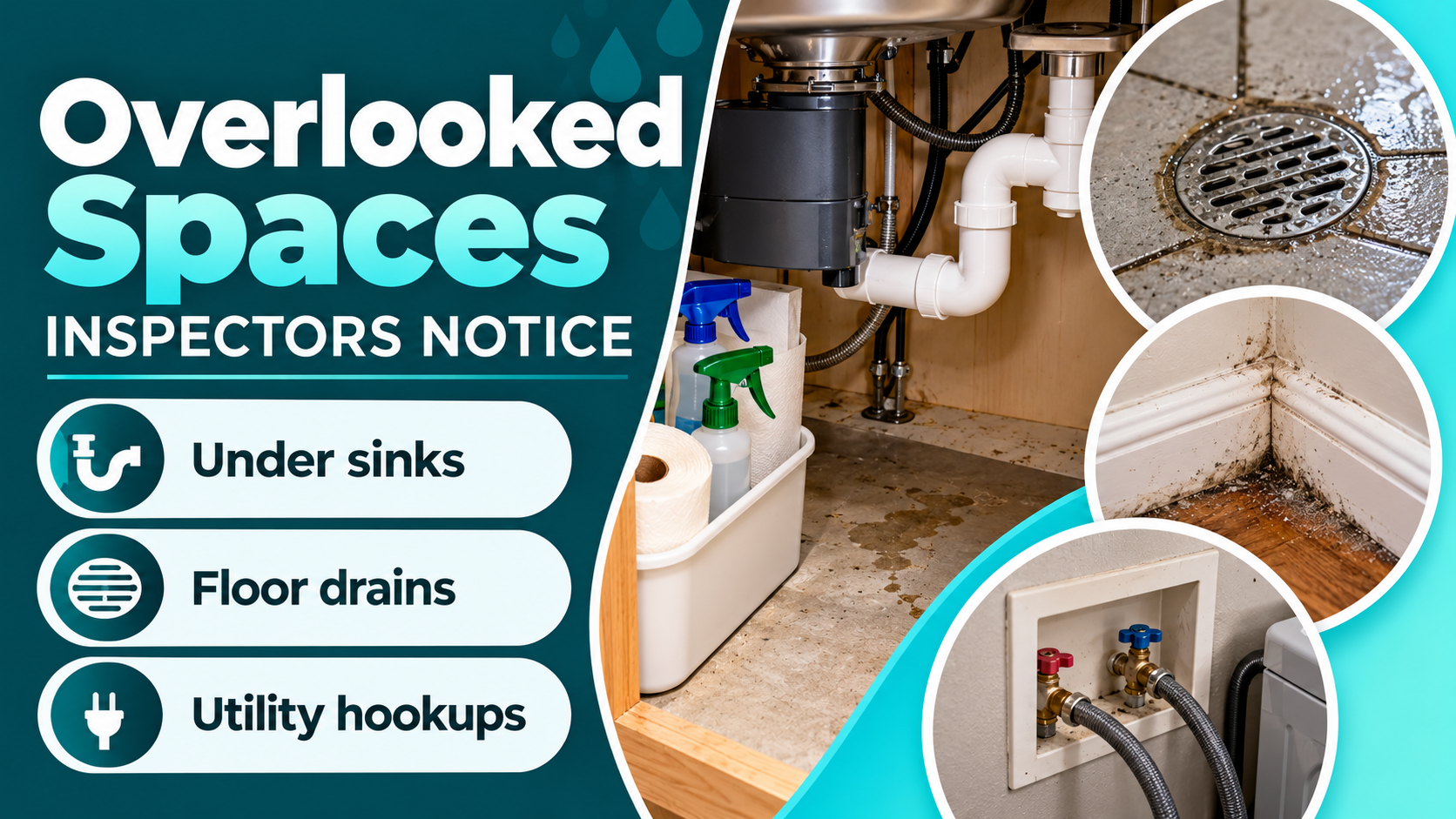
Look at prep tables, splash zones, utensil storage and the areas under equipment. Proper washing, rinsing and sanitizing of food-contact surfaces must follow the facility's approved food-safety procedures.
Accessible, stocked sinks
A blocked handwash sink or missing soap is not something a polished dining room can hide. Inspect stocking, accessibility and function throughout operating hours.
Grease, floors & floor drains
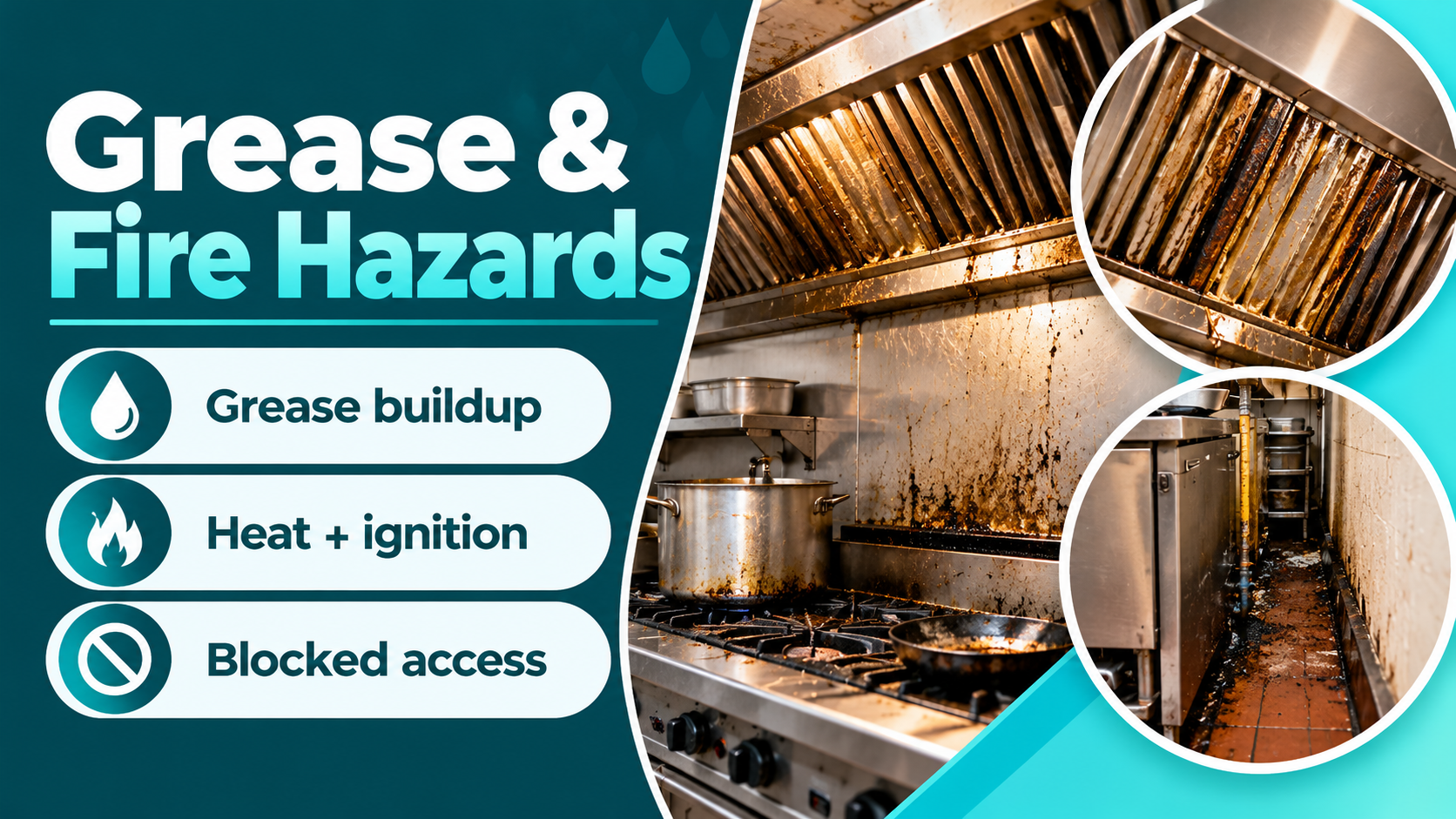
Grease collects beneath fryers, around equipment legs, at floor-wall junctions and around drains. Heavy residue can affect appearance and create slips or pest-attracting conditions.
Labels, separation & storage
Check for labeled chemicals, organized dry storage, and separation of cleaning products from ingredients. Food temperatures and dates are operational food-safety duties, not ordinary janitorial services.
Hood exteriors & filter buildup
Deposits on accessible surfaces and removable components need appropriate care. Exhaust duct and hood-system fire safety cleaning should be handled by properly qualified specialists.
Restroom condition & supplies
Guests notice odors, residue, empty dispensers and neglected door hardware. A scheduled cleaning and restocking routine supports a welcoming environment for guests and staff.
A practical inspection-prep sequence
See it. Assign it. Verify it.
Mold, mildew, dampness & what stains might mean
Moisture • Indoor air • Surface changes
Is it mold, mildew, mineral residue, or ordinary grime?
Appearance is a clue, not a laboratory diagnosis. The color of a stain alone cannot tell you what organism or hazard is present. Here is a safer way to decide what to investigate.
Growth where moisture persists
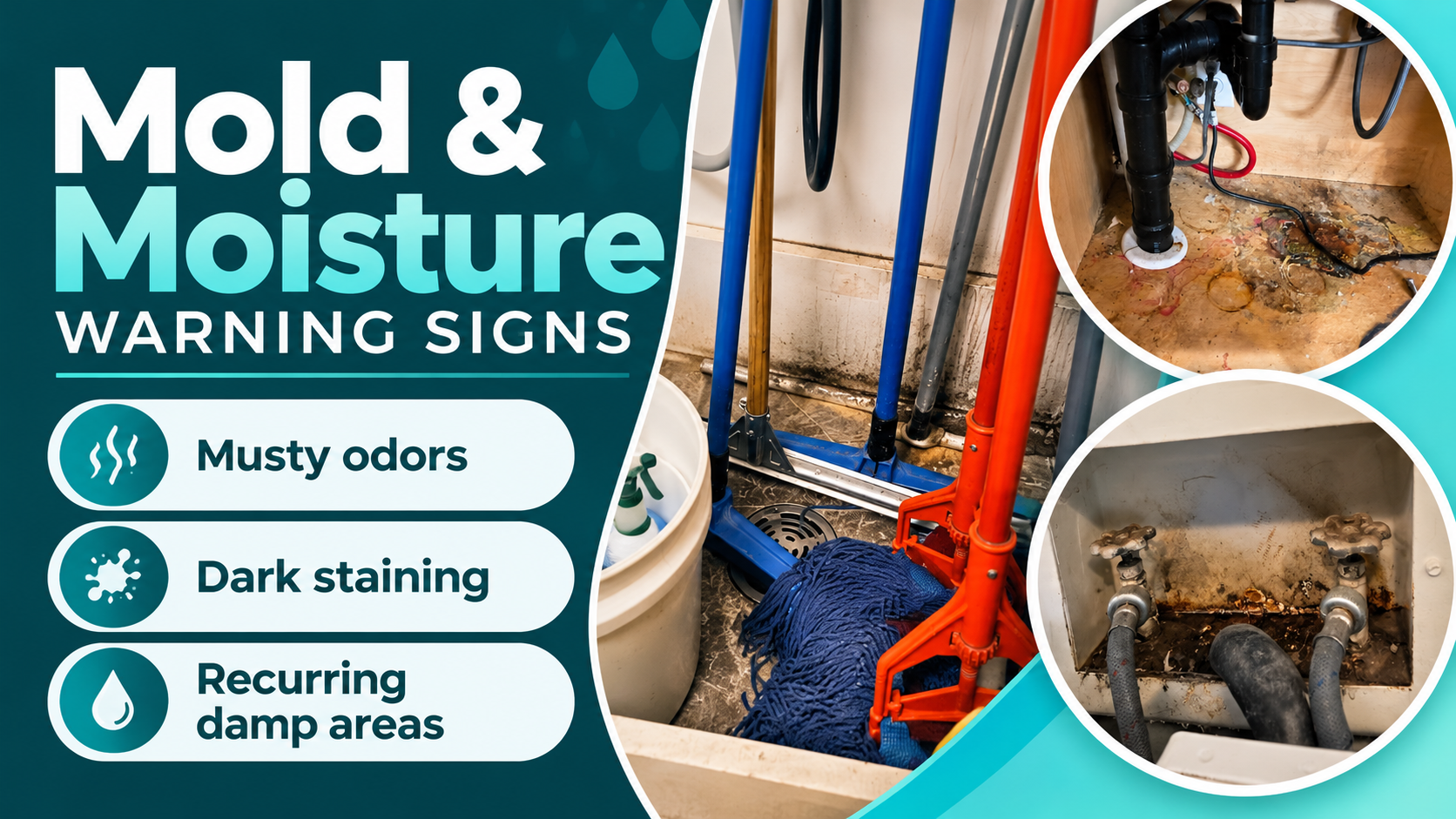
Mold is fungal growth that can appear as spots, fuzzy patches or discoloration and may be accompanied by a musty odor. It can grow on damp porous materials such as drywall, carpet backing and ceiling tiles. The moisture source must be fixed. Larger or hidden problems warrant professional evaluation.
A common label, not a reliable test
“Mildew” is a common term for certain surface fungal growth, often in humid locations. It may look flat or powdery. The name doesn't establish that a patch is harmless. Recurring growth suggests an ongoing moisture issue.
White, chalky deposits
Efflorescence can leave white mineral salts on masonry or concrete where water migrates through materials. It may look powdery, but that appearance alone does not prove mold or identify a substance. Find the moisture source.
Soot, grease, dust, and unknown residue
Dark film near vents may be dust or combustion residue. Greasy deposits around cooking equipment and unusual staining after a spill can require very different responses. Unknown chemicals, sewage, blood or suspected hazardous materials are not routine cleaning assignments.
A simple moisture decision path
Office cleaning, client impressions & real estate
Offices • Reception • Conference rooms • Commercial buildings
Your next client meeting begins at the front door.
A clean office is part of your business presentation. Entrances, glass, reception desks, meeting tables, restrooms and shared kitchens shape the experience before the first conversation begins.
The 30-second welcome check
Stand where a first-time visitor enters. Look at front glass, fingerprints, entry mats, dust on ledges, carpet traffic patterns and the route to the conference room.
Shared surfaces need a plan
Door handles, breakroom counters, coffee stations, tables and restroom touchpoints are handled by many people. Choose a frequency and product suited to the surface and risk, without promising that cleaning alone prevents illness.
Don't forget what sits above eye level
Vent grilles, overhead ledges and light covers often collect dust without drawing attention during a quick walkthrough. High dusting requires equipment, access and safety planning.
Fire hazards, bacteria, chemicals & other contaminants
Hazard recognition • Housekeeping limits
What does a cleaning-related hazard actually look like?
Grease, lint, dust & blocked routes
Combustible buildup and storage near ignition sources can elevate risk. Keep exits clear, address debris and grease on accessible surfaces, and arrange qualified inspection and cleaning for commercial exhaust systems and electrical concerns.
Residue and spills underfoot
Wet tile, greasy floors, loose mats, clutter and damaged flooring create conditions worth correcting promptly. OSHA's walking-working surface requirements address clean, orderly, sanitary conditions and hazards such as leaks and spills.
Unknown bottles are a red flag
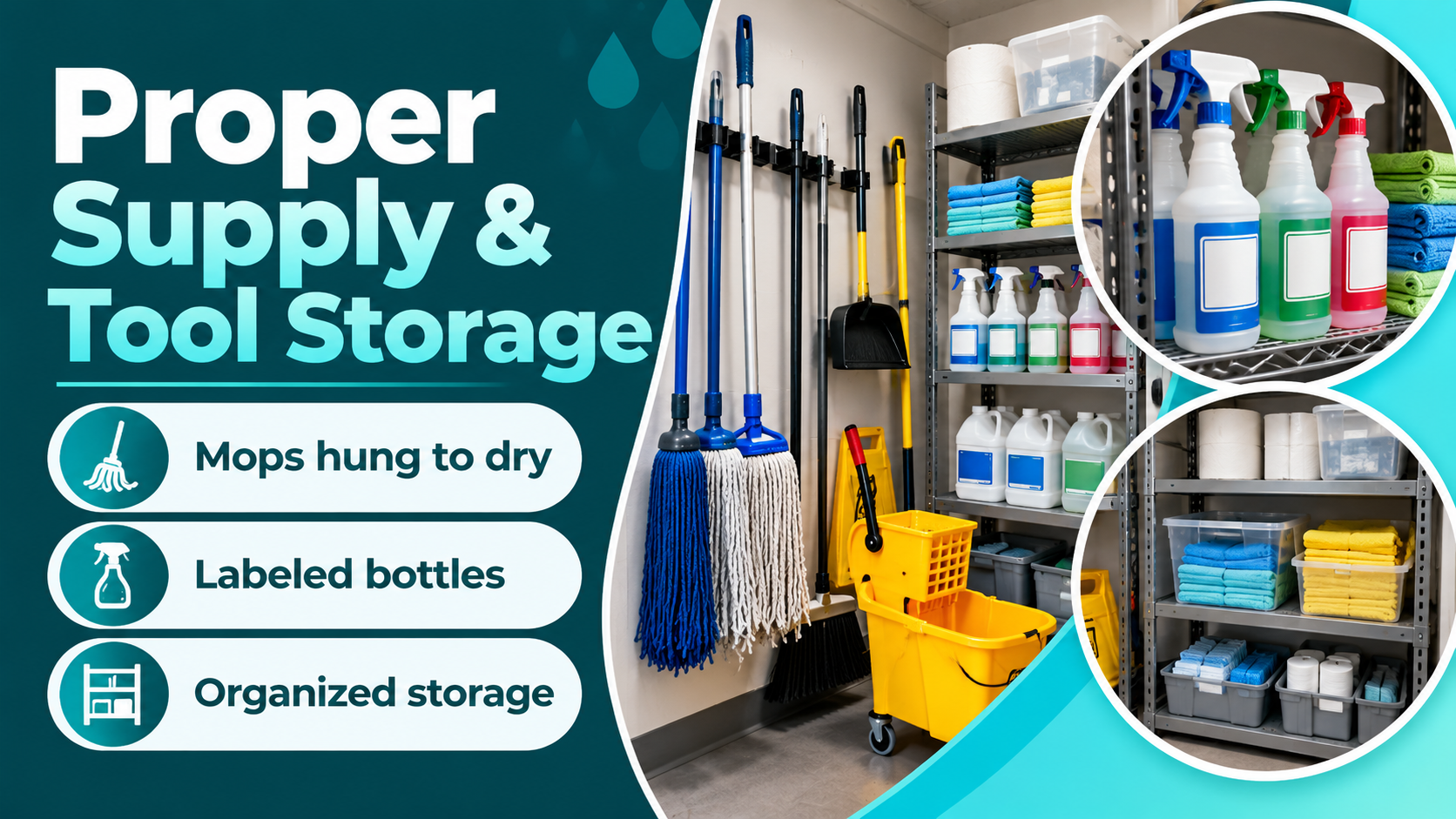
Keep containers properly labeled, review Safety Data Sheets, use required PPE and follow manufacturer dilution/contact-time directions. Never mix products, especially bleach and ammonia or acids. Product selection varies by property.
Know when not to treat it as routine dust
Sewage, blood, suspected asbestos, lead dust, unknown spill residues and extensive mold are not ordinary housekeeping tasks. Restrict access as appropriate and arrange trained, qualified response before resuming normal service.
Open the 12-point facility self-audit
Print or walk it with your team
A 12-point facility cleanliness self-audit
Use this as a general conversation starter. It is not a legal checklist or replacement for health department, OSHA or fire-code inspections.
Checkmarks are for your current browsing session only and are not submitted to Northern Lights.
Frequently asked questions
Questions we hear from facility managers
Can you tell me if a stain is mold?
We can flag visible staining, recurring moisture and musty odors during a walkthrough, but a photograph or a quick look cannot reliably identify a substance. We do not present janitorial observation as diagnostic testing. A qualified indoor-environment or remediation professional should assess suspected or extensive mold.
Will a deep kitchen clean guarantee a passing health inspection?
No. We help facilities prepare their premises, accessible surfaces and agreed back-of-house cleaning areas. Food temperature controls, employee hygiene, pest management, food safety plans and code compliance remain the operator's responsibility.
Do you clean commercial hood and duct systems?
Accessible exterior surfaces and specified removable parts may be considered within an approved cleaning scope. Full kitchen exhaust hood and duct cleaning or fire-suppression work requires qualified specialty providers and is not automatically included.
What chemicals do you bring to my building?
That depends on surface types, restrictions, food-contact requirements and the approved scope. We can share the proposed product list, manufacturer Safety Data Sheets and basic use plan before service. We may use Ecolab products when appropriate.
Can you provide recurring office cleaning and after-hours service?
Yes. Northern Lights Cleaning can tailor office and commercial janitorial schedules for daily, multi-day weekly, after-hours or periodic services based on building needs, staffing and an approved written proposal.
Property management, turnovers and show-ready buildings
Apartments • Leasing • Commercial real estate
When a property is on display, every detail counts.
Leasing teams, realtors and business buyers notice condition immediately. Cleaning supports property presentation but is not a substitute for repairs, renovations or staging.
Apartment common areas
Prioritize entrances, elevators, carpeted corridors, stairwells, amenity rooms, fitness areas, shared restrooms and trash rooms. Daily touchpoints and periodic detailed tasks should have different frequencies.
Show-ready commercial suites
Walk the same route as a visitor. Check front glass, door hardware, conference tables, visible vent grilles, floors, ledges, odors and restroom presentation.
Make-ready turnovers
Coordinate after construction or maintenance; confirm utilities, debris removal, approved access, sensitive surfaces and a final documented walkthrough.
Industrial, manufacturing and warehouse housekeeping
Factories • Warehouses • Employee areas
A clean facility must also respect production safety.
Industrial operations require attention to authorized access, facility-specific PPE, chemical compatibility, process equipment and employee movement. We scope employee facilities and approved work zones separately from controlled production areas.
Breakrooms, restrooms and offices
Maintain predictable schedules, supplies, floor care, touchpoints and documented cleaning of busy employee spaces.
Unknown process dust
Powder on a floor may be ordinary soil, combustible dust or process material. Never sweep or vacuum unidentified residues without site authorization, hazard assessment and approved equipment.
Restricted environments
Cleanrooms, data centers, semiconductor areas and other controlled spaces require separate scopes, procedures and permission. Ordinary commercial janitorial work does not imply specialist certification.
Bacteria, biofilm and cross-contamination
Wet surfaces • Touchpoints • Contamination control
Understand what a quick wipe cannot tell you.
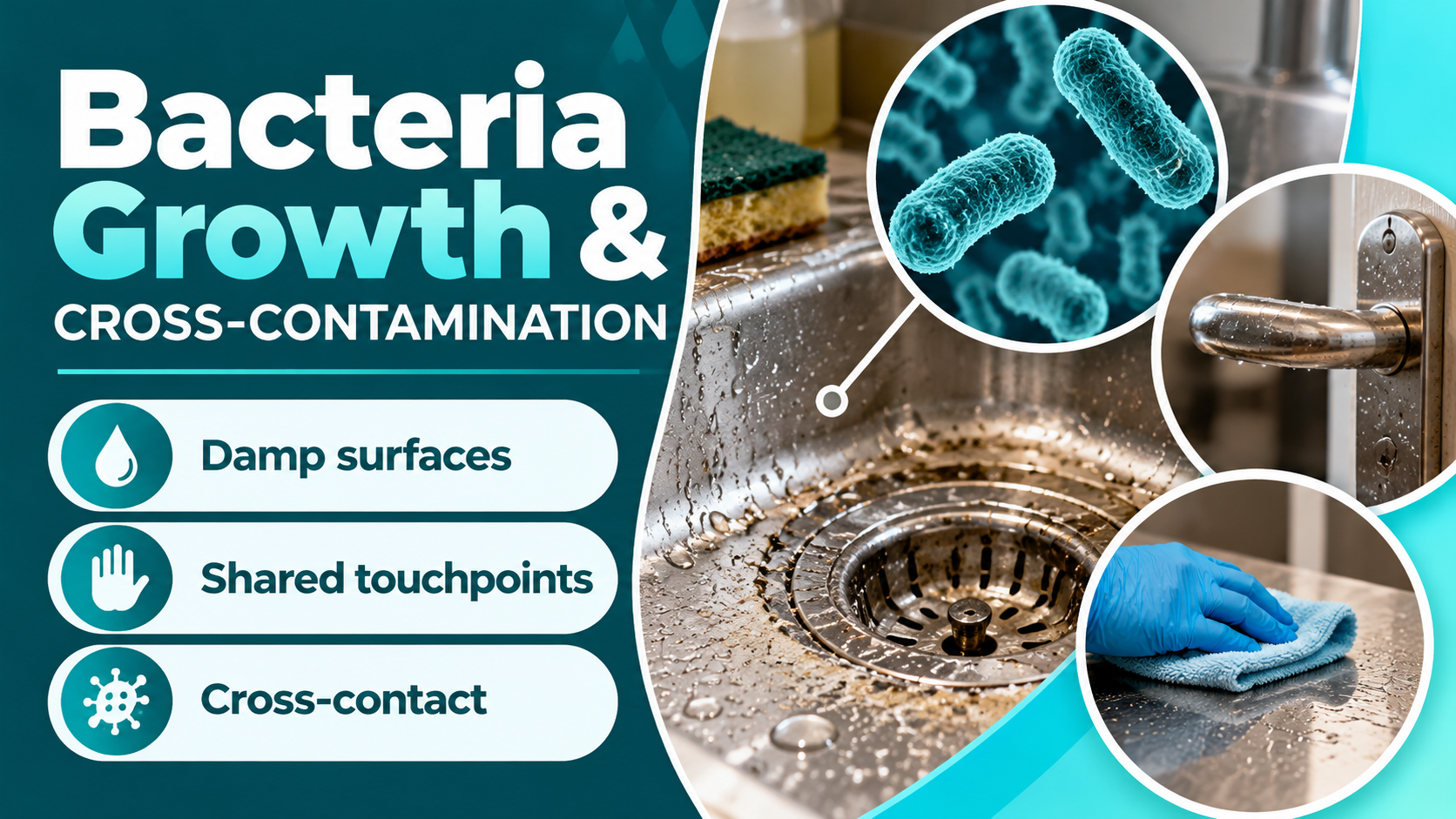
Bacteria occur naturally in many environments. Some are harmless and others may cause illness. The appearance of residue alone does not identify a species, prove infection risk or establish whether a surface is properly sanitized.
What is biofilm?
A biofilm is a community of microorganisms attached to a surface within a protective matrix. Wet plumbing, drains and other persistently damp surfaces can support biofilms. Significant water-system problems may require qualified specialists.
Cross-contact
A cloth moved from restroom fixtures to food-prep counters can spread unwanted contamination. Use zone-specific equipment and approved methods, and follow product directions for dwell or contact times.
Clean, sanitize or disinfect?
These are distinct tasks. Cleaning physically removes soil; sanitizing and disinfecting use approved products and procedures for specific purposes. A facility should specify which treatment is appropriate to each surface.
Official sources, research & regulations
Primary references
Where these facts come from
We use trustworthy government guidance to inform this educational page. Inspectors, building managers and licensed specialists remain the appropriate authorities for facility-specific compliance decisions.
- CDC: Restaurant outbreak contributing factors
- CDC: Outbreak contributing-factor investigation data
- FDA: 2022 Food Code (model for local food rules)
- EPA: Mold prevention and indoor humidity
- EPA: Drying wet materials within 24–48 hours
- OSHA: Walking-working surfaces, 29 CFR 1910.22
- OSHA: Hazard Communication, 29 CFR 1910.1200
- Ecolab: Manufacturer Safety Data Sheets


